
In a groundbreaking development, Lisa Kaltenegger, a professor of astronomy and the director of Cornell’s prestigious Carl Sagan Institute, along with lead author Stephen Kane of San Francisco State University and a team of esteemed scientists, has compiled “A Catalog of Kepler Habitable Zone Exoplanet Candidates.” This comprehensive catalog, soon to be published in The Astrophysical Journal, features over two dozen exoplanets that could potentially harbor liquid water and, perhaps, even life. The discovery adds excitement to the field of interstellar travel and exploration.
The Kepler Mission
NASA’s Kepler mission, launched seven years ago, has been diligently surveying the Milky Way and has already identified nearly 3,500 exoplanets. Among these discoveries are several exoplanets found to be within the habitable zone, offering cozy conditions that could support life as we know it. Kaltenegger humorously remarked that these exoplanets are the first ones humanity would like to examine closely and considers them as the initial pages in an ever-expanding travel guide.
Seeking Cozy and Steamy Worlds
The newly cataloged planets are located in the habitable zone, where some offer a steamy environment akin to Turkish steam baths, while others have a slightly cooler atmosphere, requiring warm winter gear like in Ithaca. The appeal lies in the diversity of these worlds, offering fascinating planetary conditions.
Kepler-62e and Kepler-62f: Old Favorites in the Habitable Zone
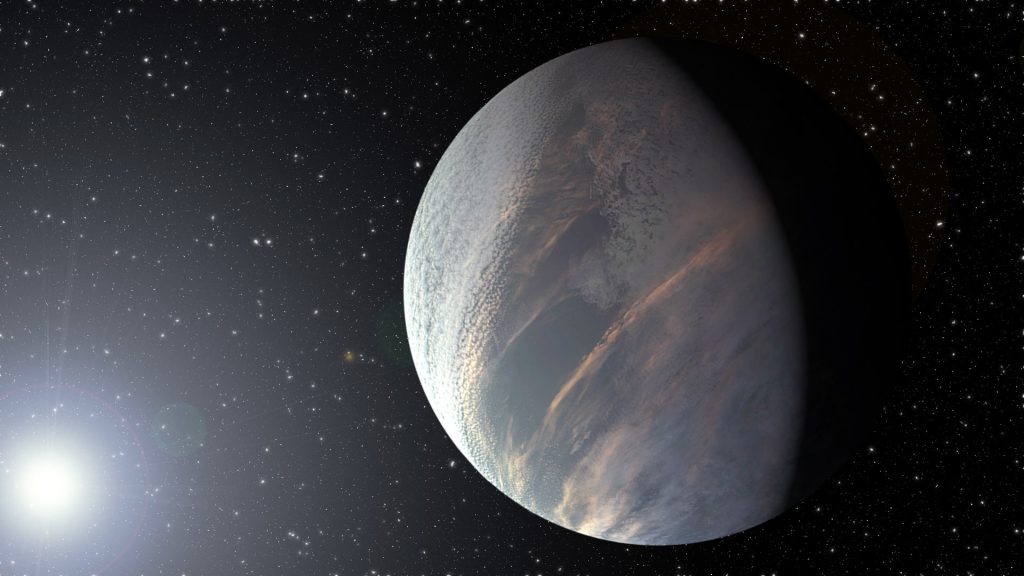
Kaltenegger expresses her preference for Kepler-62e and Kepler-62f, two exoplanets on the list, which lie in the habitable zone of their respective stars. These two worlds bear a resemblance to Earth and have the potential to captivate our imaginations if we were ever able to observe them up close.
The Carl Sagan Institute’s Quest for Exploration
While the technology to travel to exoplanets does not currently exist, it hasn’t deterred scientists from exploring and studying these distant worlds. The Carl Sagan Institute, with a focus on discovering life both inside and outside Earth’s solar system, is actively engaged in finding ways to explore these uncharted territories. The institute’s engineering professor, Mason Peck, is even working on potential travel solutions.
The Future Travel Guide
Kaltenegger outlines the institute’s strategy for exploration, focusing on gathering data about exoplanets’ atmospheric conditions through the analysis of light and colors. Their quest is to identify “pale blue dots,” Earth-like planets with a similar hue, as well as “light green jungle worlds” and “red-tinted algae ocean worlds” that could potentially expand the possibilities for future travel.
Conclusion
The discovery of the catalog of Kepler Habitable Zone Exoplanet Candidates is a major leap in understanding the diversity of exoplanets and the potential for life beyond Earth. While the practicality of interstellar travel remains a challenge, the dedicated efforts of scientists, researchers, and institutions like the Carl Sagan Institute continue to fuel our curiosity and imagination about exploring these distant, exotic exoplanets in the future.






+ There are no comments
Add yours