
The universe is vast and mysterious, with countless celestial bodies scattered throughout its expanse. Among these celestial wonders are exoplanets, planets located outside our solar system, and a special subset of these exoplanets are those found in the habitable zone. In this article, we will embark on a journey to explore the fascinating world of exoplanets, specifically focusing on those found within the habitable zone. Let’s delve into the depths of the cosmos and unveil the secrets of these distant worlds.
What are Exoplanets?
Before we dive into the habitable zone, let’s first understand what exoplanets are. Exoplanets are planets that orbit stars other than our sun. They come in various sizes, compositions, and orbits. Discovered only in recent decades, exoplanets have revolutionized our understanding of the universe and the possibilities of life beyond our own planet.
The Great Exoplanet Hunt
The discovery of the first exoplanet came in 1992, and since then, astronomers have been on a relentless search for these distant worlds. Advancements in technology, such as the Kepler and TESS space telescopes, have played a pivotal role in accelerating the discovery process. To date, thousands of exoplanets have been identified, with many more awaiting detection.
The Habitable Zone: A Cosmic Sweet Spot

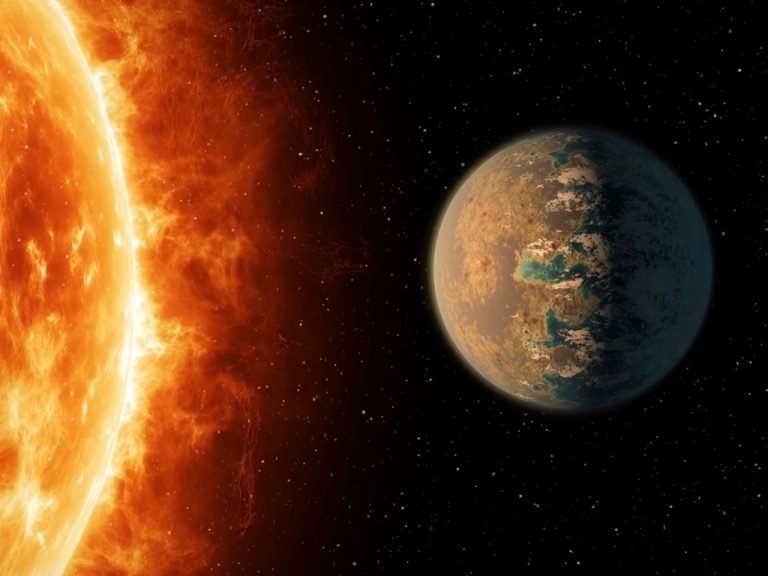
The habitable zone, also known as the Goldilocks zone, refers to the region around a star where conditions may be just right for liquid water to exist on the surface of an exoplanet. This zone is neither too hot nor too cold, making it a potential cradle for life as we know it.
Factors Affecting Habitability
Several factors determine whether an exoplanet falls within the habitable zone. These include the star’s luminosity, the exoplanet’s distance from its star, and the composition of its atmosphere. A delicate balance of these factors is required for an exoplanet to be considered habitable.
Habitability and the Search for Extraterrestrial Life
The discovery of exoplanets within the habitable zone has fueled excitement about the possibility of finding extraterrestrial life. While the presence of liquid water is a critical factor, other conditions, such as the presence of essential elements and a stable atmosphere, are equally important for life to thrive.
The Diversity of Exoplanets in the Habitable Zone
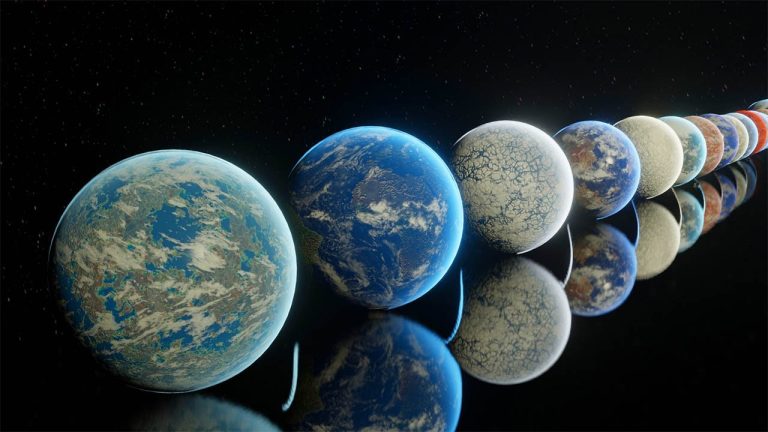
Exoplanets within the habitable zone come in various forms, each with its own unique characteristics and features.
Super-Earths and Mini-Neptunes
Super-Earths and Mini-Neptunes are two common types of exoplanets found within the habitable zone. Super-Earths are rocky planets with masses larger than Earth but smaller than gas giants like Neptune. Mini-Neptunes, on the other hand, have thick atmospheres and are more substantial than super-Earths.
Rogue Planets
Some exoplanets wander through space without being bound to any star. These are known as rogue planets. While not all rogue planets are located within the habitable zone, some might be, presenting a unique environment for potential life forms.
The Search for Habitable Exoplanets
Transit Method
A popular method used by astronomers to detect exoplanets is the transit method. This involves observing a star’s brightness and looking for periodic dips that occur when an exoplanet passes in front of it.
The Radial Velocity Method
Another common technique is the radial velocity method, which detects exoplanets by measuring the wobble of a star caused by the gravitational pull of its orbiting planets.
Challenges in Exoplanet Exploration
Distance and Time
The vast distances between exoplanets and Earth pose a significant challenge for exploration. Probes or spacecraft would take years or even centuries to reach these distant worlds.
Technological Limitations
Current technology limits our ability to gather detailed information about exoplanets. Obtaining data about their atmospheres, surfaces, and potential signs of life remains a complex task.
Conclusion
The exploration of exoplanets within the habitable zone is an awe-inspiring journey that pushes the boundaries of our understanding of the cosmos. As technology advances and our knowledge expands, we draw ever closer to answering the age-old question: “Are we alone in the universe?” The prospects of finding habitable exoplanets and potentially encountering extraterrestrial life ignite our curiosity and fuel our drive to explore the cosmos further.




+ There are no comments
Add yours