
Astronomers from Cornell University have made a significant discovery that could potentially make the search for habitable exoplanets much easier. The presence of hydrogen emanating from volcanic sources on planets throughout the universe could significantly increase the likelihood of detecting signs of life in the cosmos.
Volcanic Hydrogen Habitable Zone
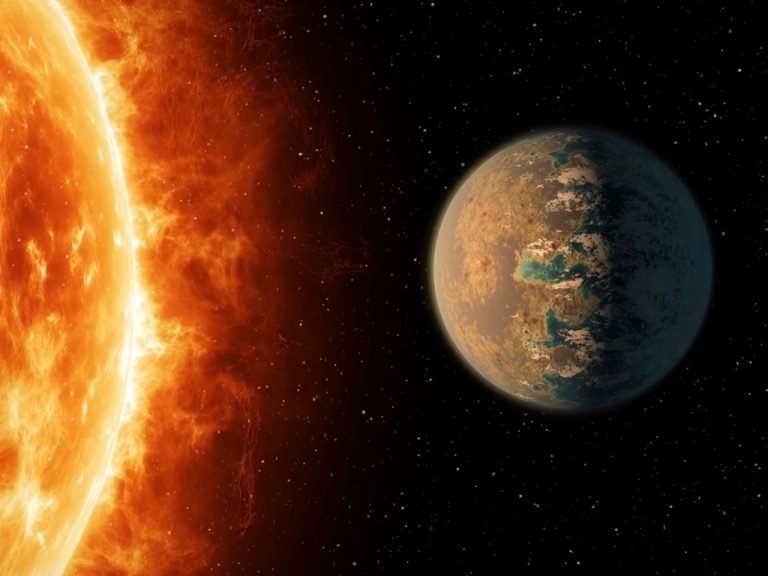
On planets situated at great distances from stars, extreme cold conditions often result in freezing over. However, lead author Ramses Ramirez, a research associate at Cornell’s Carl Sagan Institute, explains that under specific circumstances, these frozen planets could harbor life on their surfaces. The key factors are volcanic hydrogen and atmospheric warming, which could create favorable conditions for life and generate detectable signatures.
Widening the Habitability Zone
The researchers suggest that the combined greenhouse warming effect of hydrogen, water, and carbon dioxide on various planets throughout the universe could extend the habitable zones around distant stars by 30 to 60 percent. This means that areas previously considered as icy wastelands might become warm enough to support life if volcanoes are present.
Detectable Biosignatures

Hydrogen also has the advantage of “puffing up” planetary atmospheres, making it easier for scientists to detect signs of life. Astronomers can observe potential life on exoplanets more effectively due to the increased signal provided by hydrogen in their atmospheres. This could lead to the detection of atmospheric biosignatures, such as methane combined with ozone, which are indicative of life.
Expanding the Search
The solar system’s habitable zone currently extends to 1.67 times the Earth-sun distance, just beyond the orbit of Mars. However, with volcanically sourced hydrogen on planets, this habitable zone could reach up to 2.4 times the Earth-sun distance, including the region around the asteroid belt located between Mars and Jupiter. Consequently, many planets previously considered too cold for life might now be reconsidered as potential candidates.
Implications of the Discovery
This research has significant implications for the future exploration of exoplanets. With the upcoming James Webb Space Telescope (launching in 2018) and the European Extremely Large Telescope (first light in 2024), scientists may have the capability to detect atmospheric biosignatures, making the search for life beyond Earth more promising.
Conclusion
Thanks to the groundbreaking research by Ramses Ramirez and Lisa Kaltenegger, astronomers may have an expanded list of potentially habitable planets to investigate. By accounting for volcanic hydrogen as a factor in habitability, they open up new possibilities for discovering signs of life beyond our solar system. The research was funded by the Simons Foundation and the Cornell Center for Astrophysics and Planetary Science.





+ There are no comments
Add yours